
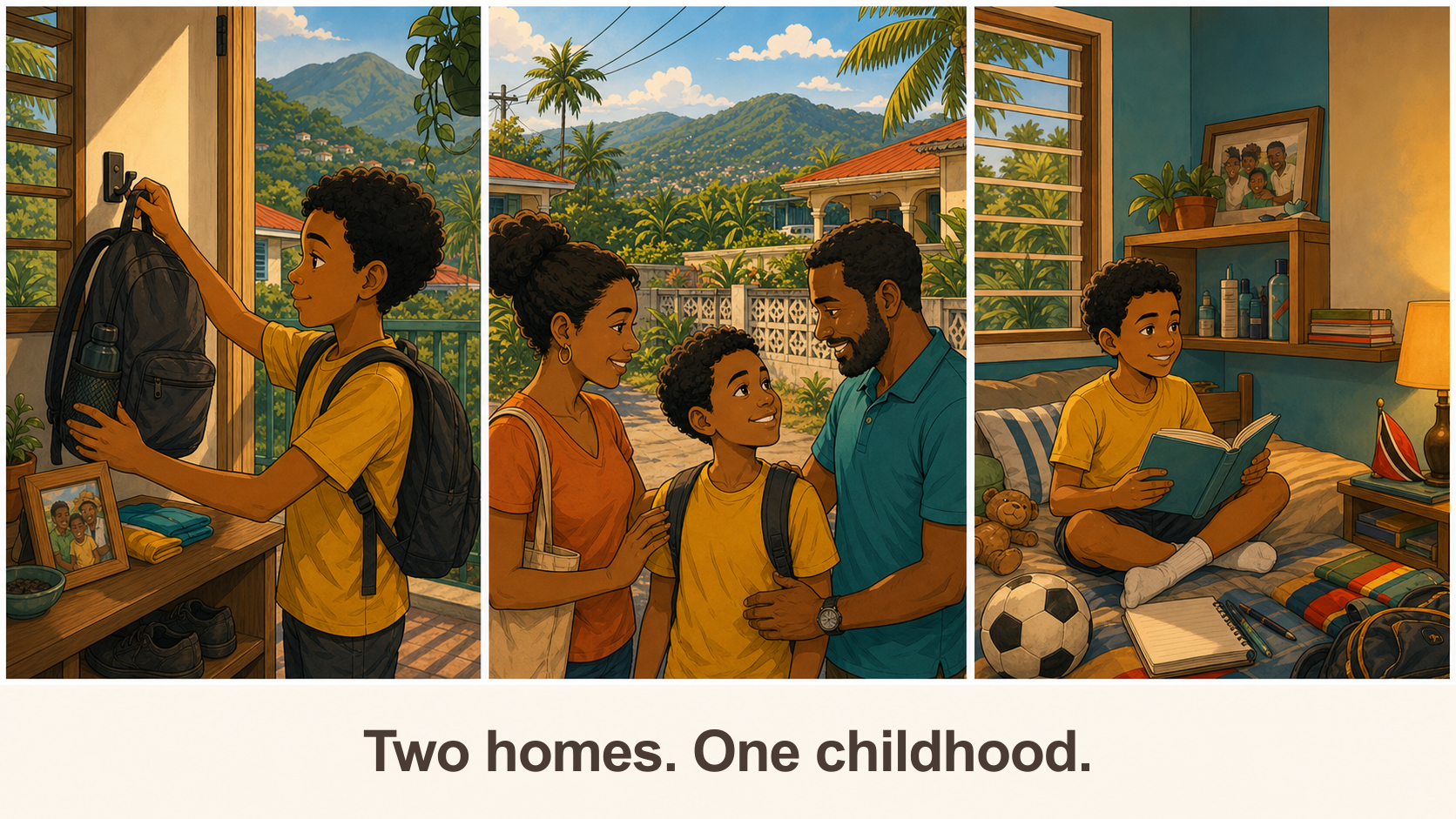
Two homes can have different routines, rooms and family rhythms. A child can still experience both as places where they are expected, known and fully included.
In Trinidad and Tobago, moving between homes often sits inside a full week of school, lessons, sport, time with grandparents, family gatherings and afternoon traffic. A little preparation can make each arrival feel less like a temporary stop and more like a return.
Belonging grows through small, repeated signals: There is a place for you here. We are ready for you. Your whole life is welcome.
1. Give them a place that is clearly theirs
A drawer, shelf, bedside basket, wall hook or section of a wardrobe can tell a child that they have a permanent place in the home.
Invite them to choose what belongs there. It may be a favourite book, a framed photo, art supplies, a football, a soft toy or something they collected outside. Their choices help the space feel personal, familiar and ready for their return.
As children grow, revisit the space with them. A corner that felt right at seven may need to change at eleven or fourteen.
2. Keep everyday essentials ready in both homes
Where practical, keep everyday items ready in each home: toiletries, sleepwear, school supplies, chargers, comfortable clothes and a few familiar snacks.
School and activity items may need extra coordination. Uniform pieces, PE clothes, football boots, dancewear, homework materials and instruments are easier to manage when both adults know what is needed and where it will be.
A simple shared checklist can help important belongings move with the child while the basics remain ready at each home.
3. Create a predictable arrival rhythm
After school, activities and a long drive through afternoon traffic, a child may need a little time to settle into the next part of the day.
A simple arrival rhythm can help: put the school bag in its place, have some water or a snack, change clothes, check what is happening next and allow a few quiet minutes before conversation or chores begin.
Keep the rhythm simple, familiar and easy to anticipate.
4. Use language that supports belonging in both homes
Children listen for signals about how they are allowed to feel. Warm, ordinary language can reassure them that enjoying one home remains safe in the other.
“Have a good time. I’ll see you on Sunday.”
“You’re going home with your other parent after school.”
“You can tell me about what you enjoyed when you come back.”
“It’s okay to miss them while you’re here.”
These phrases give a child emotional permission to care about both places and the people connected to them.
5. Keep practical information moving directly between adults
Share school notices, changes to activity times, homework deadlines, pickup details and items that need to return directly with the other parent.
When the adults carry the practical information, the child has more room to move between homes as a child. They can give their attention to school, play, family and rest.
Clear adult-to-adult communication is one of the quiet ways parents make both homes feel dependable.
6. Build a few dependable anchors across both homes
Each home can have its own character and rhythm. A few shared anchors give the child useful reference points across the week.
These anchors might include a familiar bedtime range on school nights, a regular place for homework, a shared approach to preparing the school bag or a clear routine for checking the next day’s schedule.
Consistency in the moments that carry the most responsibility can make different household routines easier for a child to navigate.
7. Make room for the people and traditions they love
In many Trinidad and Tobago families, a child’s sense of home includes grandparents, aunties, uncles, cousins, neighbours, school communities and faith communities.
Welcome the stories, photographs, gifts and traditions that connect the child to those relationships. Ask about a family gathering they enjoyed. Make space for an artwork they created elsewhere. Help them remember an important birthday or celebration.
When both homes make room for the child’s wider life, belonging becomes something they can carry easily and feel strengthened by in both places.
8. Ask what helps them feel at home
Children can offer useful insight into the practical details that help them settle. Ask simple questions and make room for honest, age-appropriate answers.
Where would you like your school things to stay?
What helps you settle in when you arrive?
Is there something you would like to have ready here?
What would make this space feel more like yours?
Choose one manageable change from the conversation and follow through. Being heard becomes part of what makes the home feel secure.
Structure can support belonging
Shared calendars, clear requests and connected information can support the practical consistency behind these everyday actions.
When both parents can see the plan, prepare what is needed and communicate changes clearly, each home is better able to welcome the child with confidence.
Two homes can feel different and still give a child one clear message: You are loved. You are expected. You belong here.